A slash of blue, a sweep of gray, some scarlet patches on the way (2025)
for string quartet
Duration: 20'
Premiere: Bologna Festival, 8 October, Oratorio San Filippo Neri, Bologna
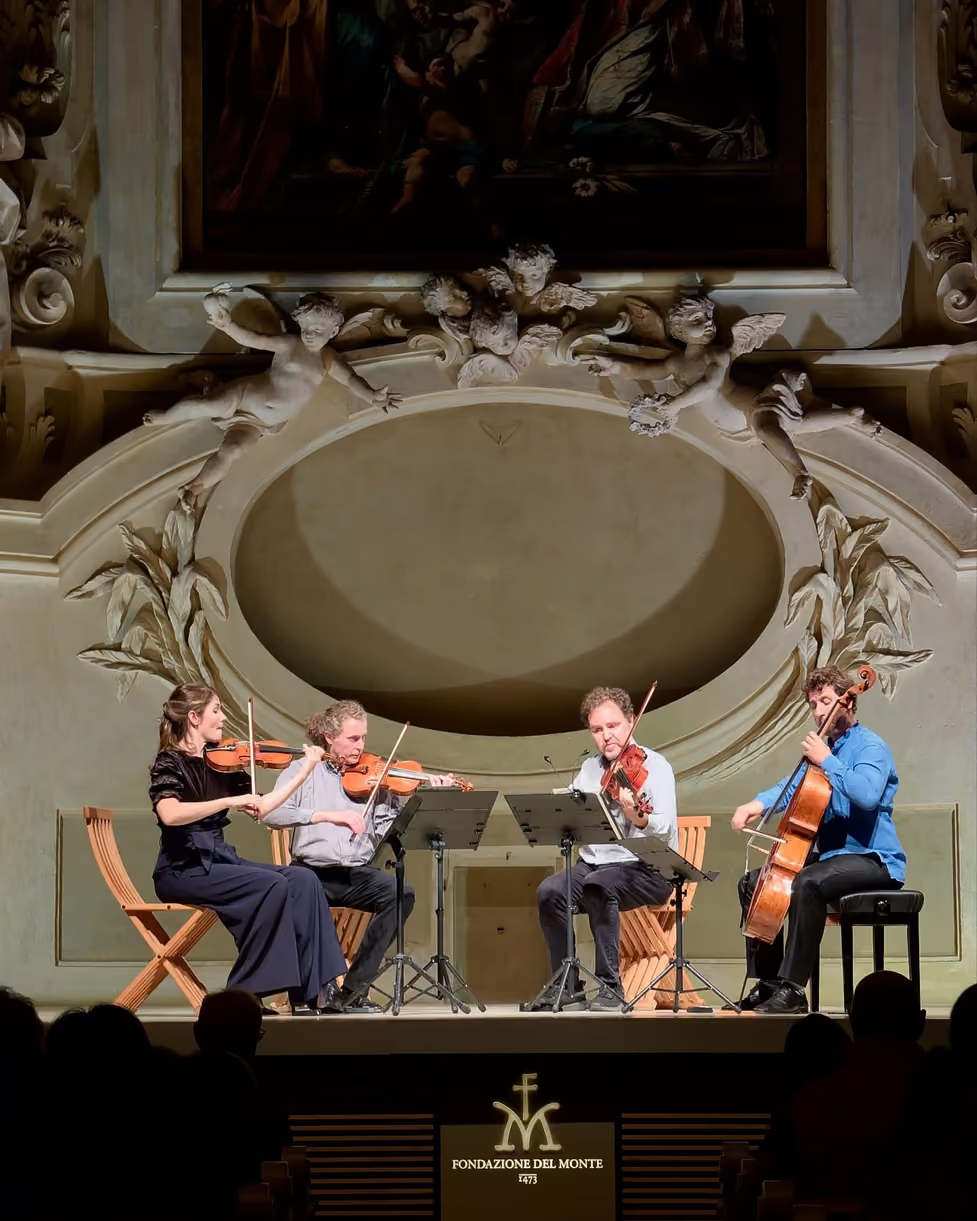
The title A slash of blue, a sweep of gray, some scarlet patches on the way is drawn from lines by Emily Dickinson that describe the evening sky through fleeting perceptions of colour: a slash of blue, a sweep of grey, sudden traces of scarlet. It is not a landscape captured in a fixed image, but a vision shaped by change, in which colour, light and texture seem to be continually transformed.
This idea of an unstable and mutable visual matter becomes the starting point of the quartet. Its form emerges through a progressive transformation of the sonic material: different textures do not follow one another as clearly separated episodes, but tend instead to arise from one another, overlap, dissolve, or gradually give way to different configurations. The transition from one sonic condition to another often takes place through minute variations, as though each new quality were already contained, in latent form, within the preceding one.
Density plays a central role in this process. The writing becomes thicker or more rarefied, gathering into more compact fields or opening into fragile and transparent textures. The relationship between the four instruments is likewise continually redefined: individual voices may merge into a single sonic body or separate, allowing details, lines, resonances and different degrees of presence to emerge.
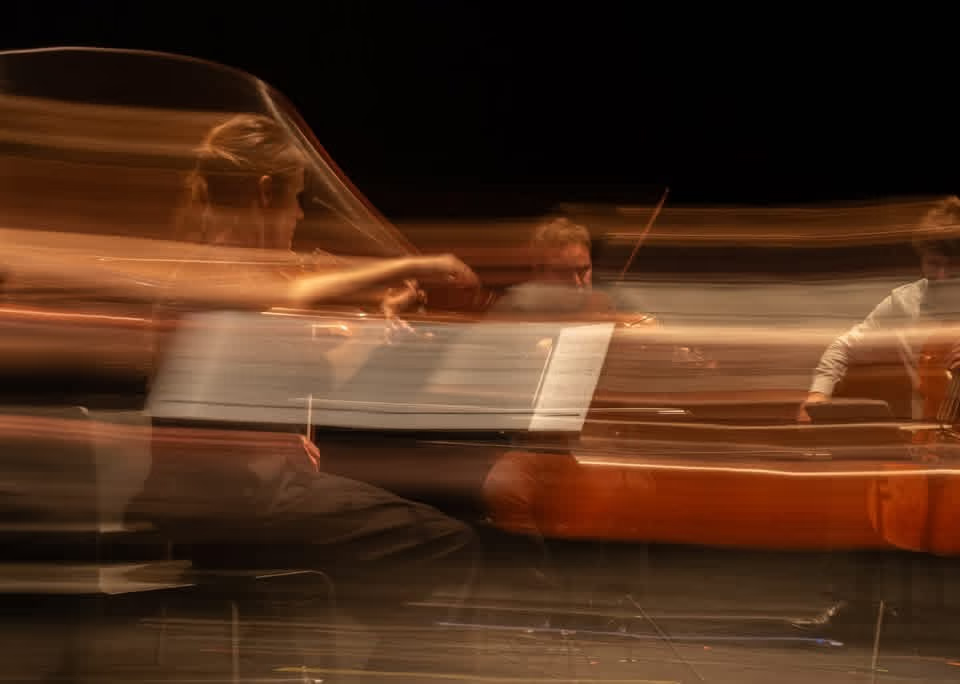
Colour is therefore not conceived as an ornamental element, but as a structural component of the writing. Timbre, sonic consistency, register and density contribute directly to the movement of the form itself. As in the sky evoked by Dickinson’s lines, nothing that appears remains identical to itself: every configuration is temporary and already contains the possibility of its own transformation.
The quartet thus unfolds as a continuous form, traversed by processes of accumulation and dissolution, by more opaque regions and others that are more luminous, by different degrees of transparency. Rather than constructing a narrative, the music brings different states of sonic matter into relation with one another and explores their gradual metamorphoses, seeking a continuity in which transformation itself becomes the underlying principle of the form.